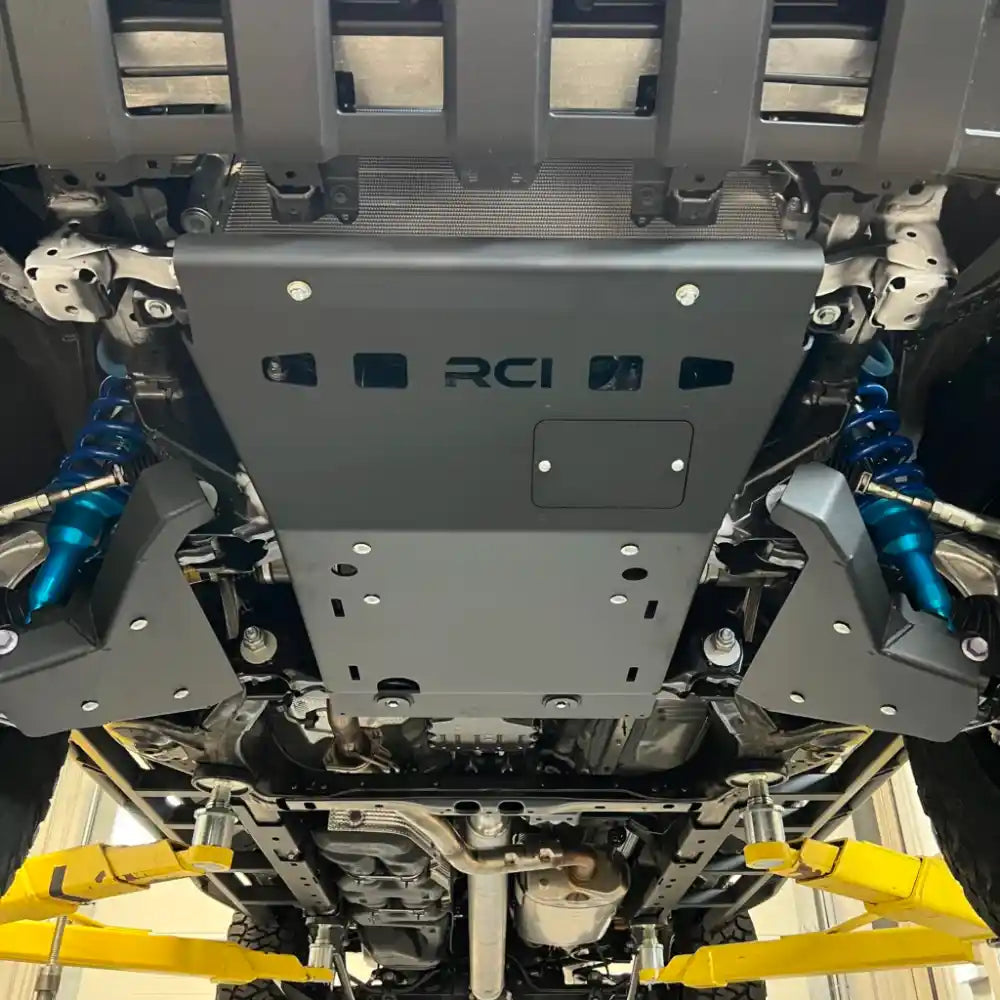
RCI Offroad full steel skid plate system installed under a Toyota Tacoma. This is what serious undercarriage protection looks like.
You've decided you want steel skid plates. Smart choice. But now you're staring at product pages showing 3/16", 1/4", mild steel, AR plate, and wondering what any of it actually means for your truck. 🤔
This is the question that fills forums with conflicting advice and zero clear answers. Everyone has an opinion. Nobody gives you a straight number.
This guide does. You'll know exactly which steel skid plate thickness you need, which steel grade to look for, how much weight to expect, and how to keep your plates from rusting out. No fluff — just the specifics.
If you're still deciding between steel and aluminum, check out our Complete Skid Plates Guide first. If you've already committed to steel, let's dig in. 🔧
Is 3/16" Steel Enough — Or Do You Need 1/4"?
This is the most-asked, least-answered question in every skid plate thread. Here's the honest answer: 3/16" (roughly 5mm) is enough for the vast majority of drivers. 1/4" (6.35mm) is for a specific type of use — and most people don't actually need it.
When 3/16" Steel is the Right Call
3/16" steel is the standard thickness used by most quality aftermarket brands including RCI Offroad and MillerCat. It handles:
Rocky forest roads and moderate trail use
Overlanding on graded and ungraded dirt roads
Occasional rock obstacles on rated trails (up to moderate difficulty)
All mid-size trucks — Tacoma, Ranger, Maverick, Colorado
Most full-size trucks used for overlanding rather than rock crawling
At 3/16", a quality steel plate will take repeated hits, slide over rocks cleanly, and still be light enough that you won't notice the weight penalty on the trail.
When 1/4" Steel is Worth It
Step up to 1/4" if you:
Rock crawl regularly on sharp, angular terrain (think Moab, Rubicon, or similar)
Drive a heavy-duty truck — F-250+, Ram 2500+, Tundra with a heavy build
Run aggressive lines and expect frequent, hard undercarriage contact
Have a dedicated off-road rig (not a daily driver)
The extra 1/16" sounds small. But on a direct hit from a sharp boulder, the difference between a dented plate and a breached plate can be significant. If you're regularly in situations where your skid plate is the last thing between a rock and your oil pan — go 1/4".
💡 Quick Rule of Thumb: Ask yourself how often your skids actually take hits. Occasional scraping and grinding = 3/16". Regular, hard impacts = 1/4". If you're not sure, 3/16" wins because it's lighter and still delivers serious protection.
🔍 Find Your Ideal Steel Skid Plate Thickness
2 quick questions — get a specific recommendation
1 of 2 — How would you describe your off-road use?
This is where most buyers go wrong — they compare thickness without checking the steel grade. Not all steel is equal. A thin AR plate can outperform a thick mild steel plate on the same hit.
Mild Steel (A36)
This is what most aftermarket skid plates are made from — and for most drivers, it's perfectly fine. Mild steel is strong, weldable, affordable, and widely available. A 3/16" mild steel plate handles the kind of abuse 99% of overlanders will ever throw at it. Brands like RCI Offroad and MillerCat use quality mild steel with powder-coat finish for their plates.
High-Tensile Steel (A514 / HSLA)
Stronger than mild steel at the same thickness. Some premium skid plate manufacturers use high-tensile alloys to offer more protection without adding as much weight. If a brand advertises "high-strength steel" or "HSLA," this is what they mean. Good choice for heavy-duty applications without going to full AR plate.
AR Plate (Abrasion-Resistant Steel — AR400 / AR500)
This is the material used in mining and construction equipment. AR plate is extremely hard and resists abrasion better than any other option. AR400/AR500 is overkill for most trucks — it's heavy, expensive, and harder to weld. But for dedicated rock crawlers who are dragging over sharp granite regularly, it's the premium choice.
Steel Grade
Hardness
Weight
Cost
Best For
Mild Steel (A36)
Standard
Moderate
Lowest
Overlanding, trail use, daily drivers
High-Tensile (HSLA)
High
Moderate
Medium
Heavy trucks, frequent hard impacts
AR400/AR500
Highest
Heaviest
Highest
Dedicated rock crawlers, extreme use
For most drivers shopping for aftermarket steel skid plates — mild steel in 3/16" from a quality brand is the right call. Don't pay for AR plate unless you're genuinely dragging your skids over sharp granite on a regular basis.
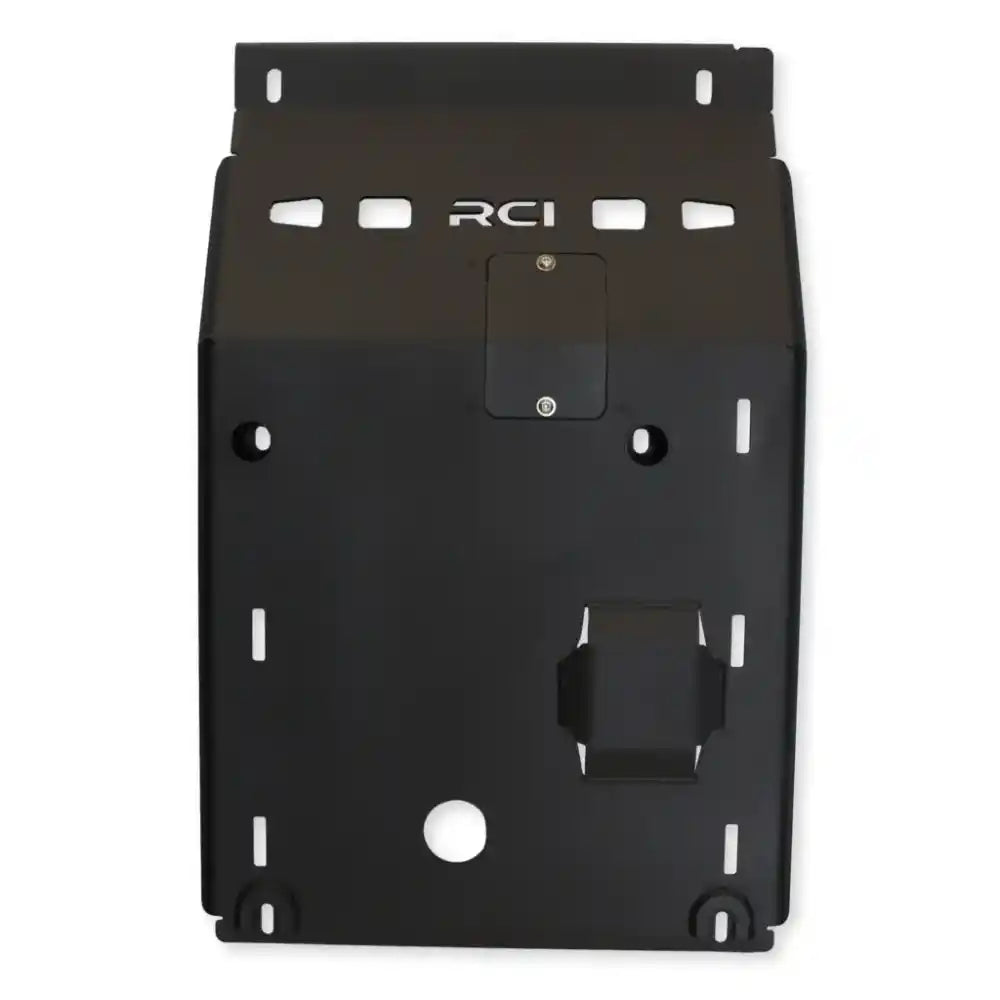
RCI Offroad steel engine skid plate — built from 3/16" mild steel for serious trail use.Oil drain access panel — change your oil without removing the skid plate.
How Much Weight Does a Full Steel Skid Plate Set Actually Add?
This is the question people ask in forums and never get a straight answer to. Here are real-world estimates based on 3/16" mild steel for mid-size trucks:
Engine / Oil Pan18–28 lbs3/16" mild steel
Transmission15–22 lbs3/16" mild steel
Transfer Case12–18 lbs3/16" mild steel
Fuel Tank14–22 lbs3/16" mild steel
Full Set Total60–100 lbsMid-size truck
Full Set — 1/4"90–150 lbsFull-size / HD truck
To put that in perspective: a full 3/16" steel set on a Tacoma adds roughly the weight of a passenger. You'll notice it on fuel economy (typically 0.5–1 mpg loss) and slightly in suspension response. On a full-size or heavy-duty truck the relative impact is less significant.
💡 Weight vs Protection Trade-off: Aluminum equivalents weigh 40–50% less. If every pound matters to you — for fuel economy, payload capacity, or performance — aluminum is worth considering. But if maximum protection is the priority, steel's weight penalty is worth it. Browse all skid plate options →
Will a Steel Skid Plate Rust on Your Truck?
Yes — bare steel will rust. But a properly coated steel skid plate won't give you rust problems if you maintain it. This is the most common concern forum users raise, and it's valid — but it's also very manageable.
Coating Options
Powder coating is the gold standard. It's a baked-on finish that bonds to the steel and provides excellent rust resistance. Most quality brands offer powder coating as a standard or add-on option. It adds cost ($50–150 extra) but is worth every cent if you drive in wet conditions or near road salt.
Spray paint (rattle can) is the DIY option. It works but needs regular touch-ups. Every scratch exposes bare steel. If you're on a budget and willing to maintain it, spray paint with a good rust-inhibiting primer is acceptable.
Cold galvanizing compound is the best touch-up solution when your coating chips. It provides sacrificial zinc protection to exposed areas and slows rust dramatically. Keep a can in your toolbox.
Maintenance Schedule
After every trail run — inspect for chips, scratches, and impact damage
Touch up any bare metal immediately with cold galv or matched spray paint
Once a year — full wash, dry, and touch-up inspection
If you live in a salt-heavy climate — rinse the undercarriage after winter drives
✅ Bottom line on rust: Buy powder-coated. Inspect after trail runs. Touch up chips fast. Do this and your steel skid plates will outlast your truck.
Forums love to debate steel vs aluminum as if it's always a toss-up. It's not. There are clear situations where steel is the only sensible choice — and clear situations where aluminum makes more sense. Here's the honest breakdown:
Situation
Steel ✅
Aluminum ✅
Rock crawling on sharp terrain
Yes
No
Moderate trail riding / overlanding
Either works
Either works
Daily driver in a salted climate
Requires maintenance
Yes
Heavy-duty or full-size truck
Yes
OK
Weight-sensitive build / fuel economy priority
No
Yes
Budget-conscious buyer
Yes — cheaper
More expensive
Need to repair a bent plate in the field
Yes — hammerable
Cracks, not bendable
The key difference: steel bends, aluminum cracks. On a hard impact, a steel plate absorbs the hit and deforms. You might need to hammer it back — but it stays in one piece. Aluminum can crack under the same impact and stop protecting you.
For more on whether skid plates are right for your specific driving situation, read our guide: Do You Need A Skid Plate?
The Mixed Setup: Steel Center + Aluminum Front and Fuel
Here's a strategy most buyers never consider — and it's arguably the smartest approach for serious overlanders who also care about weight. Use steel for the plates that take the most abuse, and aluminum (or UHMW) for the ones that don't.
The logic: your engine, transmission, and transfer case sit in the center of the vehicle. They take the hardest, most frequent hits on technical terrain. These are also your most expensive components. This is where steel earns its weight.
Your front skid plate and fuel tank plate, on the other hand, take less direct abuse. The front plate is more likely to deflect debris than absorb direct hits. The fuel tank is at the rear where impacts are less common on most trails. Running aluminum here saves you 20–35 lbs without sacrificing meaningful protection.
🔩 Recommended mixed setup for mid-size trucks:
Engine skid → 3/16" steel
Transmission skid → 3/16" steel
Transfer case skid → 3/16" steel
Fuel tank skid → aluminum or UHMW
Front skid → aluminum
Result: Full coverage, ~30–40 lbs lighter than an all-steel set.
For Tacoma owners specifically, this approach works extremely well. Check out our full rundown of the best options: Best Toyota Tacoma Skid Plates →
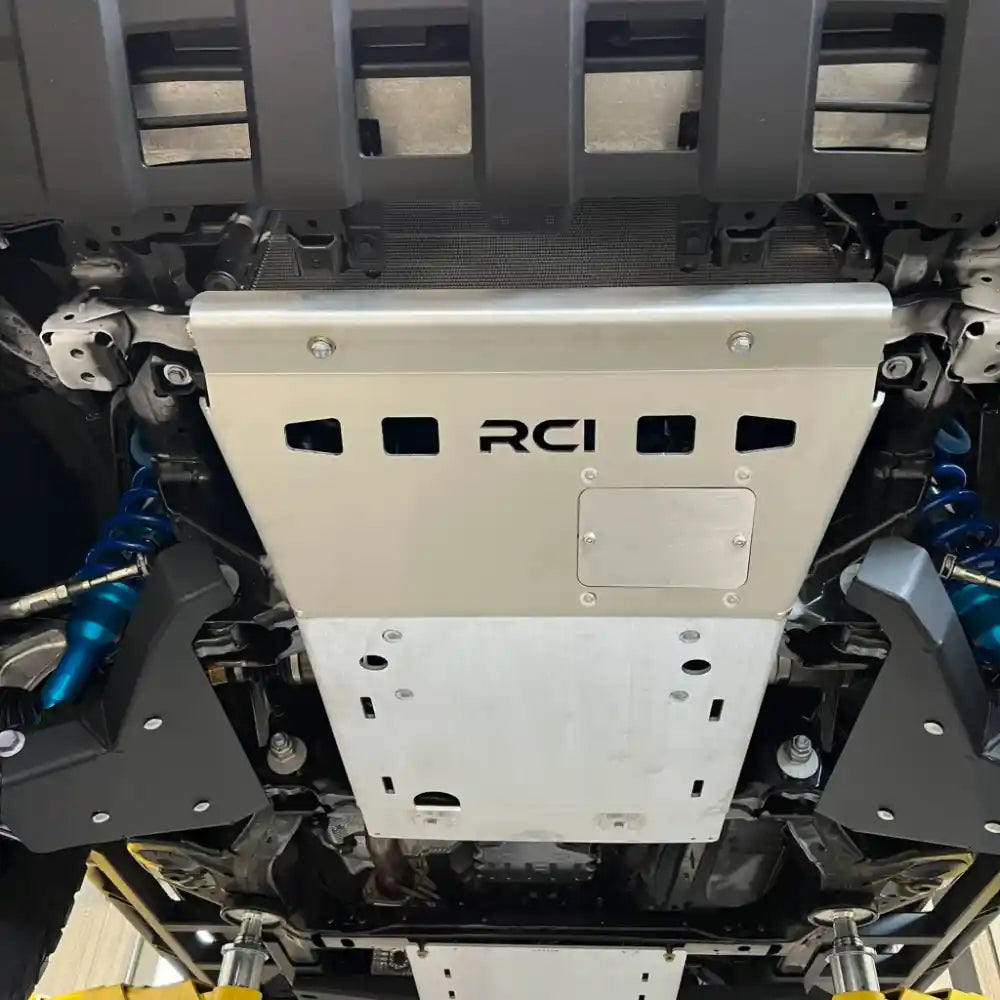
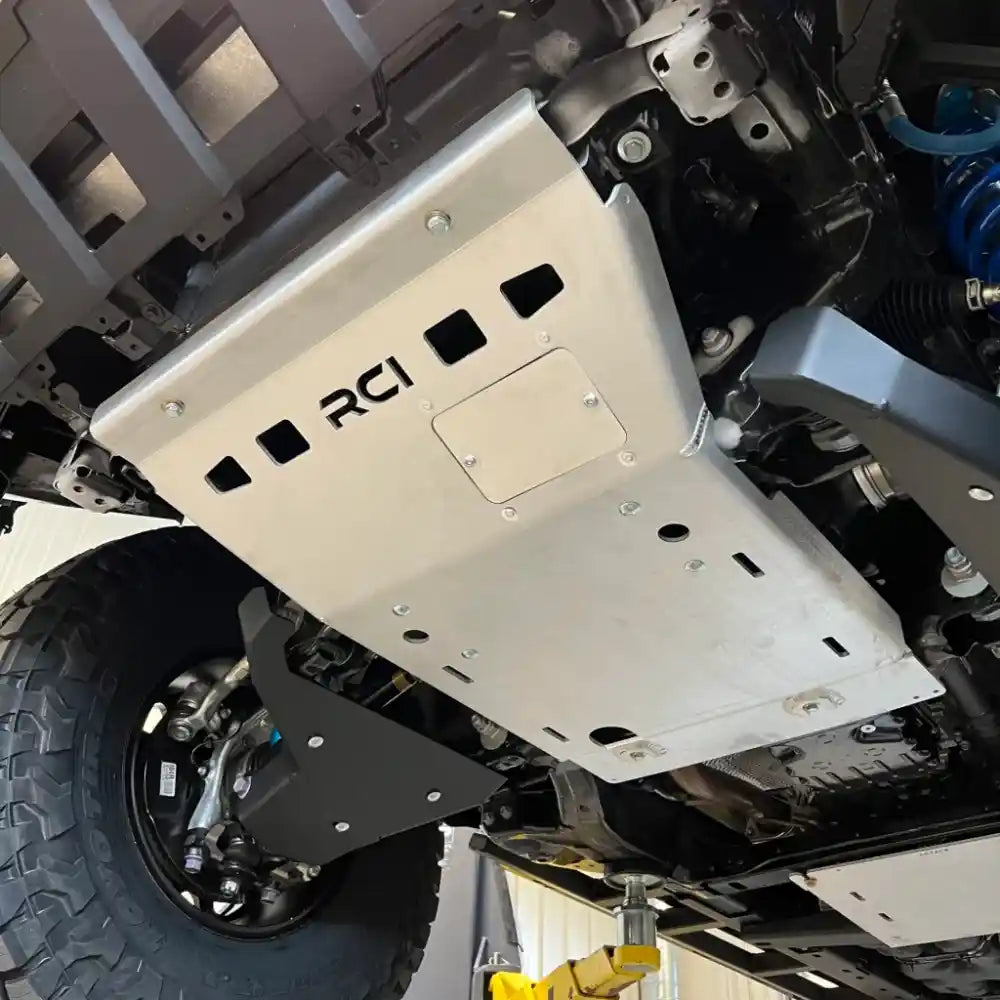
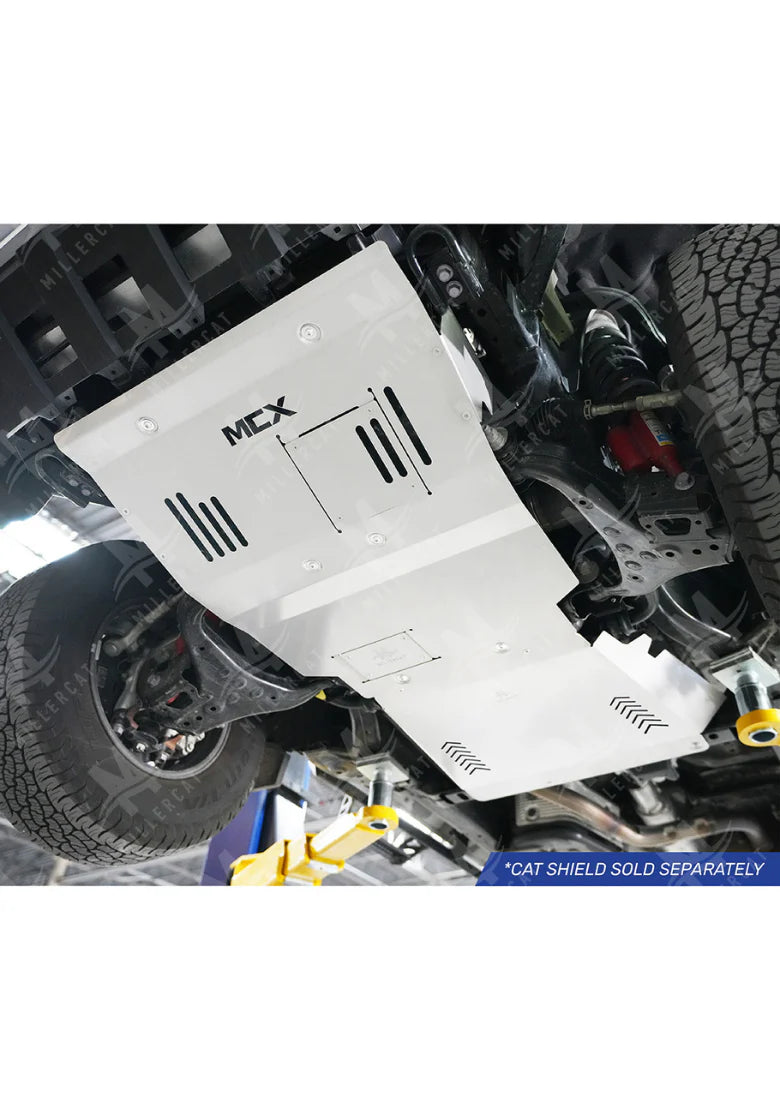
RCI steel center plates — engine, trans & transfer case in thick mild steel.MillerCat MCX skid plate installed on a 2024+ Tacoma.
Which Areas on Your Truck Need Steel Skid Plates Most?
If you're building your protection gradually, here's the priority order for steel specifically — ranked by impact frequency and repair cost:
1
⚙️ Engine / Oil Pan Skid PlateMost exposed, highest impact frequency. A breached oil pan = instant engine damage. Start here.
2
⚙️ Transmission Skid PlateExpensive to repair, takes direct hits in the center zone. Steel is the right material here.
3
🔄 Transfer Case Skid PlateCritical for 4WD. One hard hit can crack the housing and leave you stranded. Shop Transfer Case Protection →
4
⛽ Fuel Tank Skid PlateHigh priority overall but aluminum works fine here. Save steel for the center three.
5
🔧 Differential Skid PlatesAdd when budget allows, especially if running aggressive lines on rocky trails.
For moderate rock crawling on rated trails, yes. For aggressive, technical rock crawling on sharp terrain like Moab or the Rubicon — step up to 1/4". The difference is real when you're dragging across sharp granite edges repeatedly.
A powder-coated steel skid plate, properly maintained, should last the lifetime of your truck. Touch up coating chips when they appear and inspect after hard trail runs. Steel doesn't crack like aluminum — it can be hammered back into shape even after serious impacts.
Minimally. A 3/16" plate reduces clearance by less than 3/16" — under 5mm. A 1/4" plate is under 7mm. In practice, you won't notice the difference on the trail. Low-profile designs minimize this even further.
Yes — this is one of steel's biggest advantages over aluminum. Mild steel skid plates can be welded, repaired, and re-coated. AR plate is harder to weld but still repairable by a skilled welder. This isn't possible with aluminum (which cracks rather than bends) or UHMW plastic.
Generally yes. Steel is less expensive to produce than aluminum, so equivalent coverage in steel typically costs 20–30% less than aluminum. The exception is if you add powder coating — that adds $50–150 to a steel plate but is highly recommended for rust protection.
RCI Offroad and MillerCat are the top picks for steel skid plates in the overlanding community. RCI Offroad is known for heavy-duty mild steel builds with oil drain access doors and precise vehicle-specific fitment. MillerCat's MCX skid plates are built for serious protection on newer Tacoma and 4Runner platforms. Both brands offer fitment for Tacoma, 4Runner, Wrangler, Bronco, Ranger, and more.
It depends on the design. Many quality aftermarket steel skid plates include an oil drain access door — a small hinged panel that lets you drain oil without removing the plate. Always check whether your chosen plate has this feature before buying. Removing a 25 lb steel plate every 5,000 miles gets old fast.
Fit and finish first class. I made an error on my initial order, reached out to customer service and they had everything squared away with just a couple of emails. Great communication on shipping and shipping progress. Would definitely use these folks again.
We are very happy the rack fits the painted roof of our ‘25 Bronco Heritage. Leitner right now might be the only company that makes a rack that fits the painted roof. Typical great Leitner attention to detail